About
FOLLOW YOUR HEART WHEN YOU KNOW WHAT YOU WANT – NO MATTER WHAT HAPPENS. AND HOPE FOR A LITTLE LUCK ALONG THE WAY.
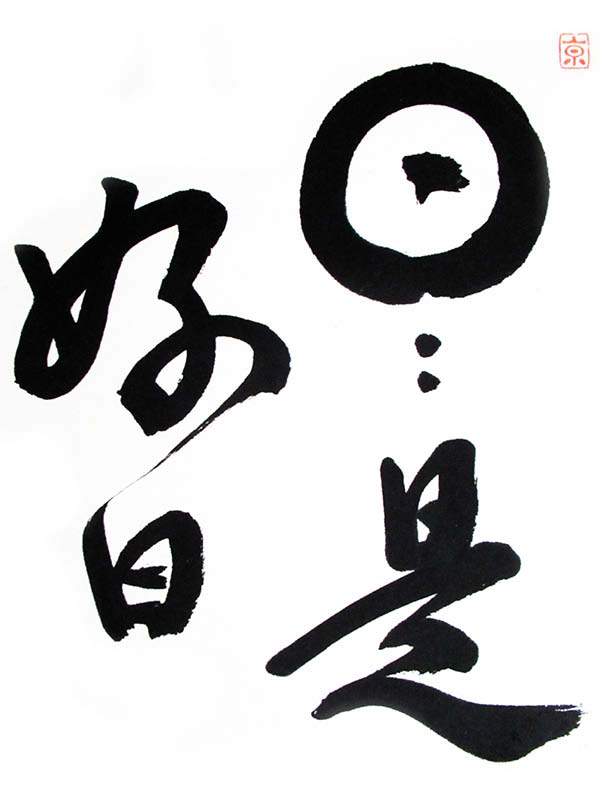
A few years ago, I bought a calligraphy piece at the shop of the Sanjūsangen-dō Temple in Kyōto, beautifully written in old Japanese: “Nichi nichi kore kōjitsu.”
I have followed my passion for Japanese art and culture, for its ancient traditions, and studied Japanese studies. As part of my coursework, I chose anthropology and archaeology—fields that take you far away and back in time. That has always fascinated me. I gave that investigative, searching part of myself a place in my PhD in business administration and in my work as a university lecturer and researcher at various Dutch universities. And—where better than here?—in my career as a strategic advisor at the National Police.
All this time, my joy in art in all its forms remained, along with a need to create with my hands. That became ceramics. Not so strange for a ‘half’ archaeologist. All those beautiful shards, literally thousands, passed through my hands during archaeological excavations: the fragile texture of Bronze Age pottery, the incisions on early Slavic bowls, meters-high ochre amphorae on the seabed off Corsica, Roman oil lamps in a two-meter-deep silt layer in a bay in Israel. And then, on the last day of an underwater expedition off the coast of Takashima in Japan, I suddenly saw in my spotlight a grey celadon vase from the Yuan period. Proof once again that remnants of Kublai Khan’s fleet lie here. In the 13th century, he tried in vain to conquer Japan.
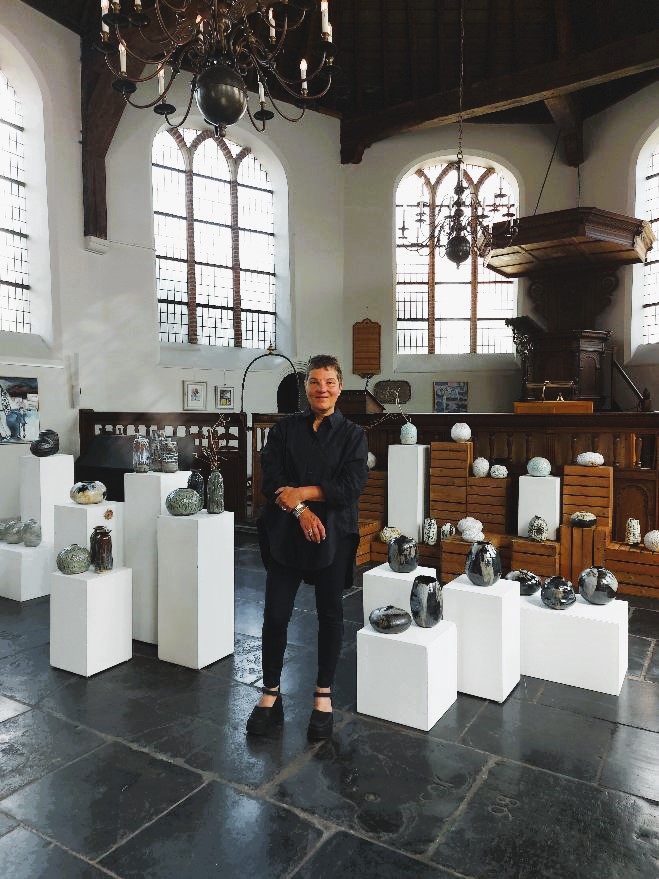
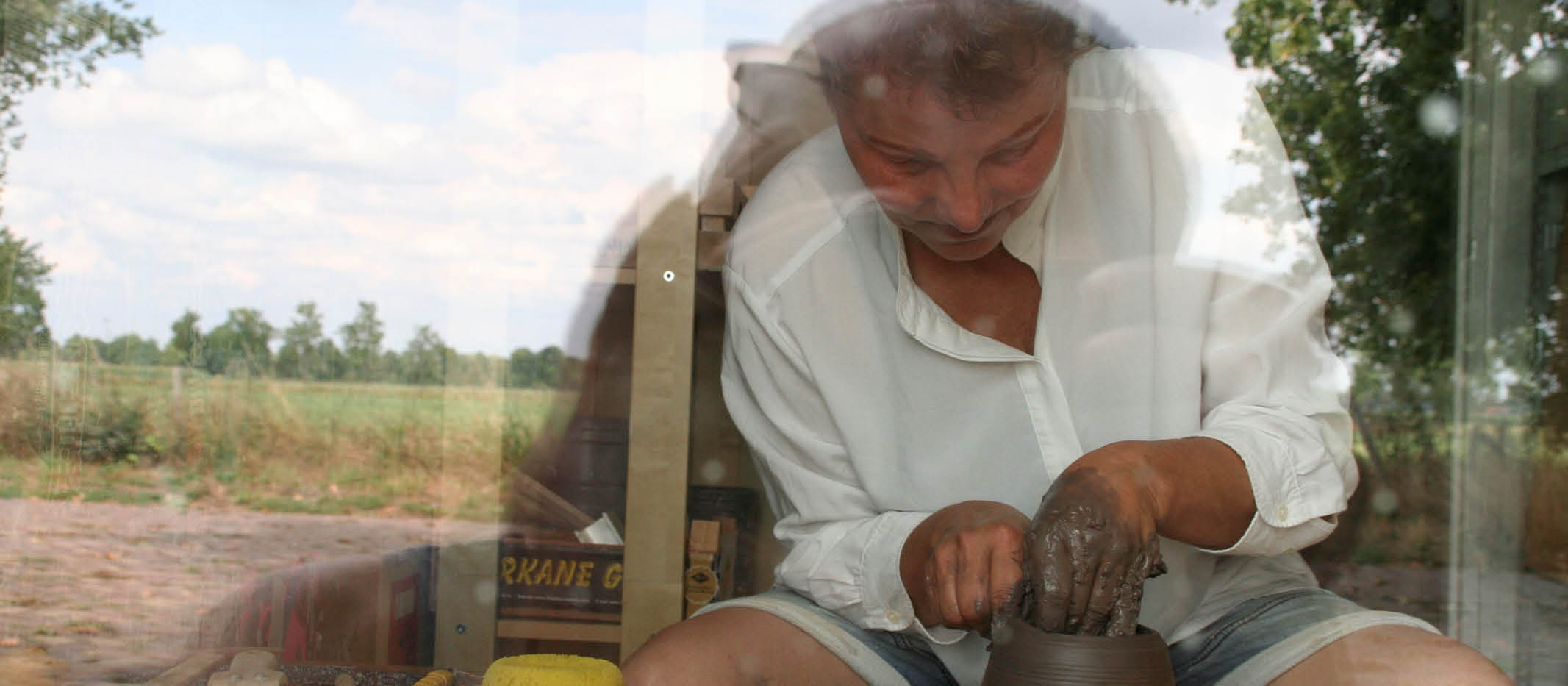
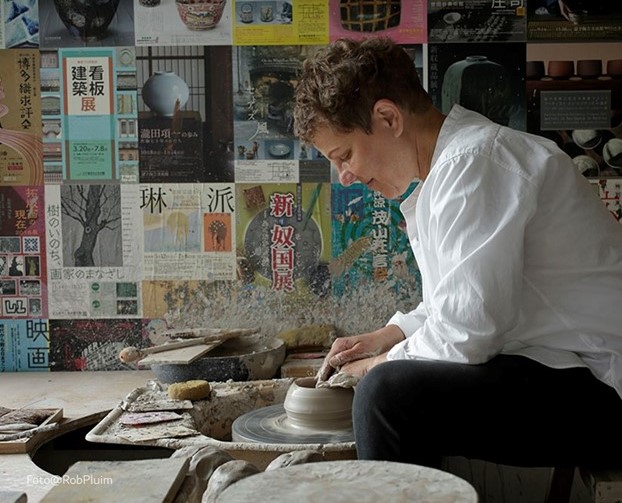
And so I became a ceramicist. I took my first lessons in Milsbeek, a traditional potters’ village in North Limburg, on the kick wheel. In 2020, I set up my own studio. I spend almost every day with my hands in the clay. And then it happens naturally: the beginning of creating something beautiful. My three-week work period in Mashiko, one of Japan’s famous traditional pottery villages, was in a sense life-changing. There truly are potters who cherish the almost anachronistic ideal of wanting to nourish the human soul.
Besides ceramics, writing is another way for me to create with both hands and mind. Just as in clay, I feel the texture of a story, the shape of a thought, in words. My fascination with Japan and its history finds its place here as well: I write about the daily life of the Dutch on Deshima, about ancient trade routes, about forgotten stories waiting to be relived. It is a way to make the past tangible, but also to create connections between cultures and times, just as I do with clay in my studio. Writing—like pottery—is an exercise in patience, attention, and joy: taking an idea, experimenting with it, letting it mature, and then shaping it into something that lasts.